
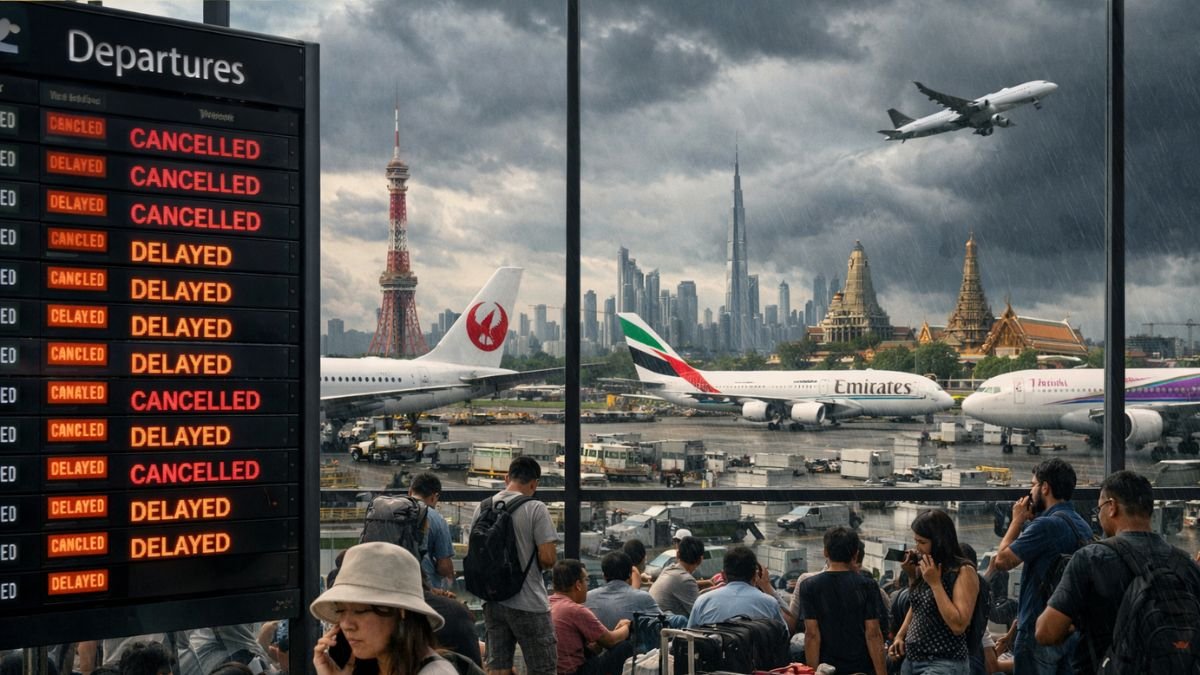
Air travel across Asia faced major disruption as thousands of passengers experienced delays and cancellations across key international hubs.
A total of 67 flights were cancelled and 1,470 delayed, impacting major airports in Thailand, Japan, Singapore, the UAE, India, and Indonesia.

The scale of disruption highlights how vulnerable high-traffic aviation networks can be, especially across busy regional corridors connecting Asia and the Middle East.
Major Airports Facing the Biggest Impact
Several of Asia’s busiest airports reported significant operational strain, with delays far outweighing cancellations.
- Soekarno-Hatta International Airport (Jakarta) recorded the highest disruption levels with 216 delays and 13 cancellations
- Suvarnabhumi Airport (Bangkok) saw 199 delays and 5 cancellations
- Tokyo International Airport (Haneda) reported 182 delays and 3 cancellations
- Indira Gandhi International Airport (Delhi) faced 176 delays and 5 cancellations
- Singapore Changi Airport handled 159 delays and 3 cancellations
- Narita International Airport (Tokyo) recorded 90 delays and 10 cancellations
- Dubai International Airport saw 82 delays and 6 cancellations
Other affected hubs included Mumbai, Bengaluru, Osaka, Phuket, and Sharjah, showing how widespread the disruption was across the region.
Airlines Most Affected by the Disruptions

Several major airlines reported operational challenges, particularly those with large domestic or regional networks.
- Batik Air and United Airlines led cancellations with 10 each
- IndiGo recorded the highest delays with 93 flights affected
- Air India reported 4 cancellations and 74 delays
- All Nippon Airways faced 75 delays
Other major carriers such as Emirates, Singapore Airlines, and Thai Airways also experienced notable disruptions.
Key Cities Impacted Across Asia
The disruptions stretched across multiple major cities, including:
- Jakarta and Makassar (Indonesia)
- Bangkok and Phuket (Thailand)
- Tokyo and Osaka (Japan)
- Dubai and Sharjah (UAE)
- Delhi, Mumbai, and Bengaluru (India)
- Singapore
High-density airports and domestic-heavy travel networks were particularly vulnerable, leading to cascading delays throughout the day.
Why So Many Flights Were Affected
While disruptions like these can stem from multiple factors, the pattern suggests pressure on busy aviation systems. High passenger volumes, tight flight schedules, and operational constraints often combine to create ripple effects.
In hubs like Jakarta, Tokyo, and Delhi, where traffic is consistently high, even minor disruptions can quickly escalate into widespread delays. Meanwhile, cancellations tend to concentrate among specific airlines facing scheduling or operational challenges.
What Passengers Should Do During Flight Disruptions
If you are traveling during such disruptions, taking proactive steps can help reduce stress and inconvenience:
- Check real-time flight updates via airline apps or airport websites
- Contact airlines directly for rebooking or compensation options
- Arrive early to allow extra time for changes or queues
- Keep travel documents easily accessible
- Stay alert for gate changes or announcements
Being prepared can make a significant difference when dealing with large-scale travel disruptions.
Conclusion
The recent wave of flight delays and cancellations across Asia highlights the fragile nature of modern air travel systems.
With 1,470 delays and 67 cancellations, passengers across major cities like Tokyo, Dubai, Bangkok, and Delhi faced significant disruptions.
As travel demand continues to grow, maintaining operational efficiency across busy hubs will remain a key challenge for airlines and airports alike. For travelers, staying informed and flexible is the best way to navigate such unpredictable situations.