
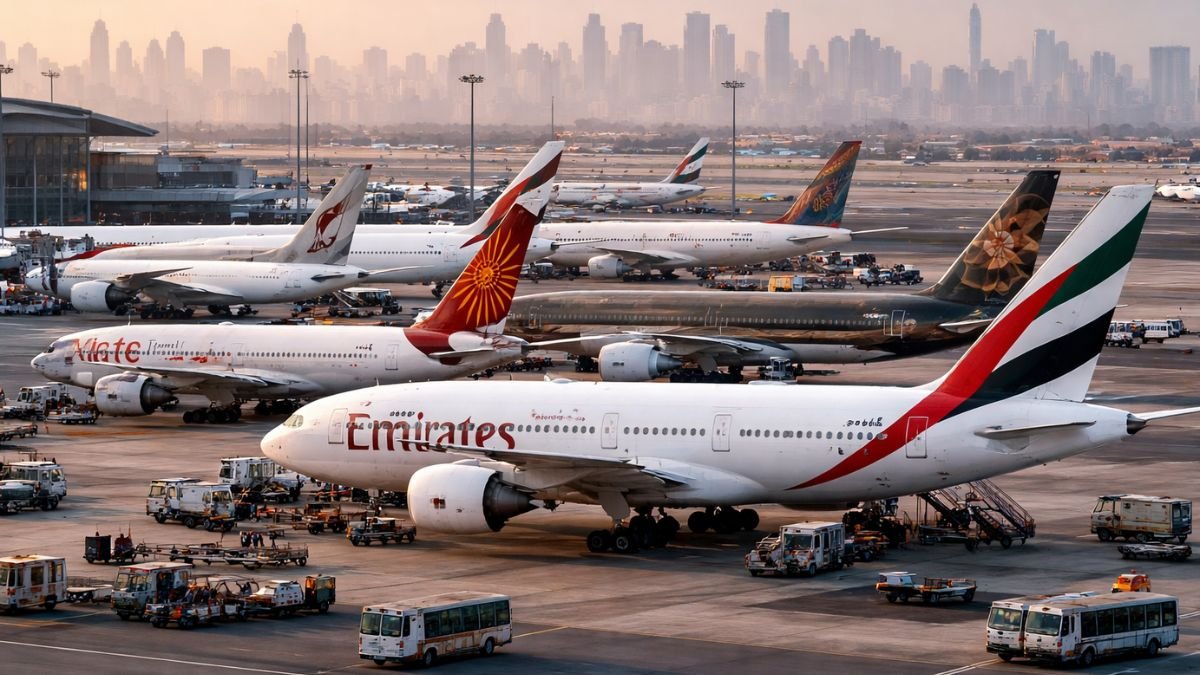
The Middle East travel landscape is undergoing rapid change as renewed uncertainty around the Iran ceasefire begins to affect aviation and tourism.
Countries including Jordan, United Arab Emirates, Qatar, Saudi Arabia, and others are navigating a shifting environment where stability is no longer guaranteed.

Rather than a complete shutdown, the region is experiencing a recalibration. Airlines, tourism authorities, and travelers are adjusting in real time to maintain connectivity while managing safety concerns.
Airlines Adjust Routes and Operations
Airlines across Europe, Asia, and the Middle East have responded quickly by modifying flight paths and schedules. Many carriers are avoiding high-risk airspace, particularly around Iran, while continuing essential long-haul operations.
Major airlines such as Singapore Airlines, Lufthansa Group, and British Airways have reduced frequencies or temporarily suspended select routes. Meanwhile, Gulf carriers like Emirates and Qatar Airways are maintaining core operations with flexible scheduling.

Key strategies include rerouting flights, offering flexible rebooking options, and closely monitoring geopolitical developments. This approach allows airlines to remain operational while minimizing risk.
Gradual Resumptions Expected in Phases
Despite current disruptions, airlines are not withdrawing from the region entirely. Instead, they are planning phased resumptions based on evolving conditions.
Routes between the UAE and Europe, Qatar and Asia, and Saudi Arabia and Europe are expected to recover first. High-demand corridors, particularly those connecting Mumbai, London, and New York, are likely to stabilize sooner.
Short-term recovery may begin within one to two months with adjusted routes, while full normalization could take up to a year, depending on geopolitical stability.
Tourism Sector Faces Shifts, Not Collapse
Tourism across the Middle East remains active but is adapting to new realities. Key destinations such as Dubai, Abu Dhabi, and Doha continue to operate with strong infrastructure and contingency planning.
However, travelers are changing their behavior. Many are choosing direct flights over connecting routes, avoiding regions near conflict zones, and booking closer to departure dates. Travel costs are also expected to rise due to longer flight paths, increased fuel prices, and higher insurance premiums.
Cruise tourism is similarly affected, with operators rerouting itineraries away from the Gulf toward alternative destinations like the Mediterranean and Red Sea.
Strategic Importance of the Strait of Hormuz
A major factor influencing the situation is the Strait of Hormuz, a critical chokepoint through which nearly 20% of the world’s oil supply passes.
Any disruption or increased military presence in this region can have immediate global consequences. Rising oil prices directly impact aviation fuel costs, leading to higher airfares and operational adjustments by airlines.
For tourism, this translates into increased travel expenses and potential delays, particularly for routes connected to the Gulf.
Stable Hubs Continue to Anchor Travel
Despite regional uncertainty, several countries remain relatively stable and continue to support tourism growth. The UAE, Saudi Arabia, and Qatar are maintaining strong travel infrastructure and actively promoting safe travel corridors.
Meanwhile, regions with higher risk levels, such as Iran, Iraq, and Syria, are experiencing reduced travel demand due to safety concerns and airspace restrictions.
Industry Adapts to Changing Conditions
The global travel industry is demonstrating resilience through adaptation. Airlines are diversifying routes and implementing dynamic pricing models, while tourism boards are enhancing communication and promoting safe destinations.
Travelers are also becoming more flexible, prioritizing insurance coverage and adaptable booking options. This shift reflects a broader trend toward cautious but continued travel.
Conclusion
The current disruptions in Middle East travel highlight a period of adjustment rather than decline. Ceasefire uncertainty and geopolitical tensions are reshaping how airlines operate and how travelers plan their journeys.
While challenges remain, key hubs continue to provide stability, and the industry is adapting through flexible strategies and operational resilience.
The future of travel in the region will depend largely on how stability evolves in the coming months, but for now, global connectivity remains intact—just operating under a more cautious and dynamic framework.