
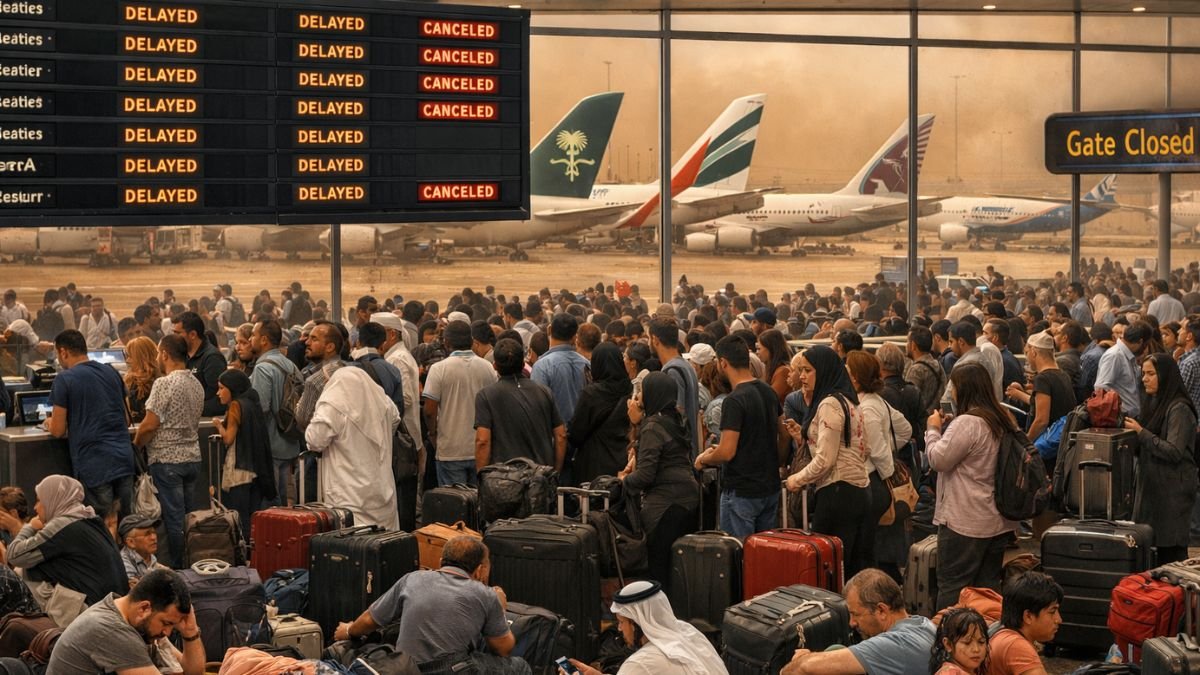
Thousands of passengers faced major travel disruptions across the Middle East today as airlines reported a combined total of 593 flight delays and 51 cancellations.
The disruptions impacted key aviation hubs across Saudi Arabia, the United Arab Emirates, Egypt, Qatar, and Bahrain, affecting both regional and international connectivity.

Airports in major cities including Dubai, Riyadh, Jeddah, Cairo, Doha, and Manama experienced operational strain due to heavy air traffic and airline-specific challenges. Travellers were left stranded or forced to adjust plans as delays stretched across multiple routes.
Airports Hit Hardest by Delays and Cancellations
Among the affected airports, Cairo International Airport recorded the highest number of delays, with 161 flights impacted, largely driven by operational issues involving Egypt Air and partner airlines.
King Abdulaziz International Airport in Jeddah and King Khalid International Airport in Riyadh also saw significant delays, with 115 and 104 flights delayed, respectively. These disruptions were mainly linked to Saudia, Flynas, and flyadeal operations.

In the UAE, Dubai International Airport reported 98 delays and 7 cancellations, while Sharjah International Airport experienced the highest cancellations overall, with 15 flights grounded, largely tied to Air Arabia services.
Other affected hubs included:
- Hamad International Airport (Doha): 51 delays, 1 cancellation
- Bahrain International Airport (Manama): 8 delays, 9 cancellations
- King Fahd International Airport (Dammam): 31 delays, 3 cancellations
- Ras Al Khaimah International Airport: 1 delay, 2 cancellations
Airlines Under Operational Pressure
Several major airlines reported significant disruptions across their networks. Saudia recorded the highest delay volume overall, with 87 delays and 3 cancellations, particularly across Riyadh, Jeddah, and Cairo.
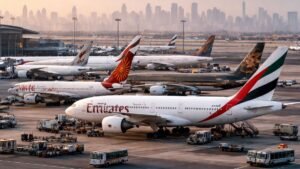
Egypt Air followed closely with 76 delays and 2 cancellations, heavily concentrated at Cairo International Airport. Emirates reported 70 delays, reflecting congestion at Dubai and regional routes.
Other key airline impacts included:
- Flynas: 62 delays across Saudi hubs
- Qatar Airways: 51 delays, 1 cancellation in Doha
- flyadeal: 43 delays across multiple airports
- FlyDubai: 33 delays and 9 cancellations
- Air Arabia: 28 delays and a notable 25 cancellations, accounting for nearly half of all cancellations
Smaller-scale disruptions were also reported by IndiGo, Etihad Airways, and Kuwait Airways, indicating widespread operational strain across the region.
Key Disruption Patterns Across the Region
Today’s disruption pattern highlights a mix of airport congestion and airline-specific operational challenges. High-traffic hubs like Cairo, Dubai, Riyadh, and Jeddah experienced heavy delays due to scheduling pressure and passenger volume.
In contrast, cancellations were more concentrated in specific locations such as Sharjah and Bahrain, where airline operations—particularly Air Arabia and FlyDubai—played a larger role in grounding flights.
Notably, all delays at Hamad International Airport in Doha were attributed to Qatar Airways, suggesting a centralized operational impact rather than broader airport congestion.
What Passengers Should Do During Disruptions
For travellers impacted by these disruptions, staying informed and prepared is essential. Key recommendations include:
- Regularly check flight status through airline apps or official airport websites
- Arrive early to accommodate possible schedule changes
- Stay connected with airline customer support for rebooking options
- Keep essential travel documents and items in carry-on luggage
- Monitor airport announcements for gate or timing updates
- Consider flexible travel arrangements where possible
Conclusion
The widespread flight disruptions across the Middle East today underline the vulnerability of major travel hubs to both operational challenges and high passenger demand.
With 593 delays and 51 cancellations, thousands of travellers were affected across Saudi Arabia, the UAE, Egypt, Qatar, and Bahrain.
While delays dominated in larger hubs such as Cairo and Dubai, cancellations were more concentrated in airline-specific operations, particularly in Sharjah and Bahrain.
As travel demand continues to rise, such disruptions highlight the importance of efficient airline coordination and proactive passenger communication.